On the place of absence : The Duomo of Venzone

Sul luogo dell'assenza: Il Duomo di Venzone – Il Restauro Architettonico
La distruzione e la ricostruzione di monumenti storici hanno sempre alimentato un dibattito tra coloro che mirano a preservare l’aspetto originale e coloro che propongono nuove direzioni. Da eventi come il crollo del campanile di San Marco nel 1902 a quelli causati dalla guerra, dal terremoto o dall’azione umana, si è aperto un dilemma continuo: ricreare “com’era, dov’era” o adottare soluzioni alternative.
L’evoluzione del restauro nel corso dei decenni ha mostrato diverse risposte: alcune strutture sono state ricostruite parzialmente, altre lasciate come simboli di tragedie passate. La Carta di Venezia del 1964 ha proposto un approccio cauto legando la legittimità della ricostruzione a criteri di conservazione fisica e documentazione obiettiva.
Tuttavia, nonostante queste linee guida, ad ogni tragedia che colpisce un monumento si suscita un nuovo dibattito tra chi invoca il ripristino delle forme perdute per preservare l’identità del luogo e chi si oppone in nome della coerenza architettonica contemporanea o dell’etica.
The destruction and reconstruction of historic monuments have always fueled a debate between those who aim to preserve the original appearance and those who propose new directions. From events such as the collapse of St. Mark’s bell tower in 1902 to those caused by war, earthquake or human action, there has been an ongoing dilemma: recreating “as it was, where it was” or adopting alternative solutions.
The evolution of restoration over the decades has shown different responses: some structures have been partially reconstructed, others left as symbols of past tragedies. The 1964 Venice Charter proposed a cautious approach by tying the legitimacy of reconstruction to criteria of physical preservation and objective documentation.
However, despite these guidelines, with each tragedy that befalls a monument, a new debate arises between those who call for the restoration of lost forms to preserve the identity of the place and those who oppose it in the name of contemporary architectural coherence or ethics.
In alcuni casi, ragioni di ordine simbolico hanno guidato le decisioni: la risposta al terrorismo in Italia ha portato alla ricostruzione di edifici colpiti. Allo stesso modo, la scelta internazionale di ricostruire il ponte di Mostar ha significato un rifiuto della divisione etnica causata dalla guerra.
La differenza di trattamento nella ricostruzione dei monumenti colpiti da calamità naturali rispetto a quelli danneggiati da azioni umane solleva dubbi sulla coerenza delle decisioni. Alcuni edifici, come la torre di Pavia, non sono stati ricostruiti nonostante il danno strutturale, mentre altri avrebbero forse richiesto una diversa valutazione se la causa del crollo fosse stata diversa.
Si potrebbero elencare numerosi casi di distruzione e ricostruzione, dalle ricostruzioni post-incendio in Inghilterra a eventi più recenti come la distruzione del Budda di Bamiyan o della Cupola d’Oro in Iraq. Ogni tragedia impone il confronto tra le diverse visioni del restauro.
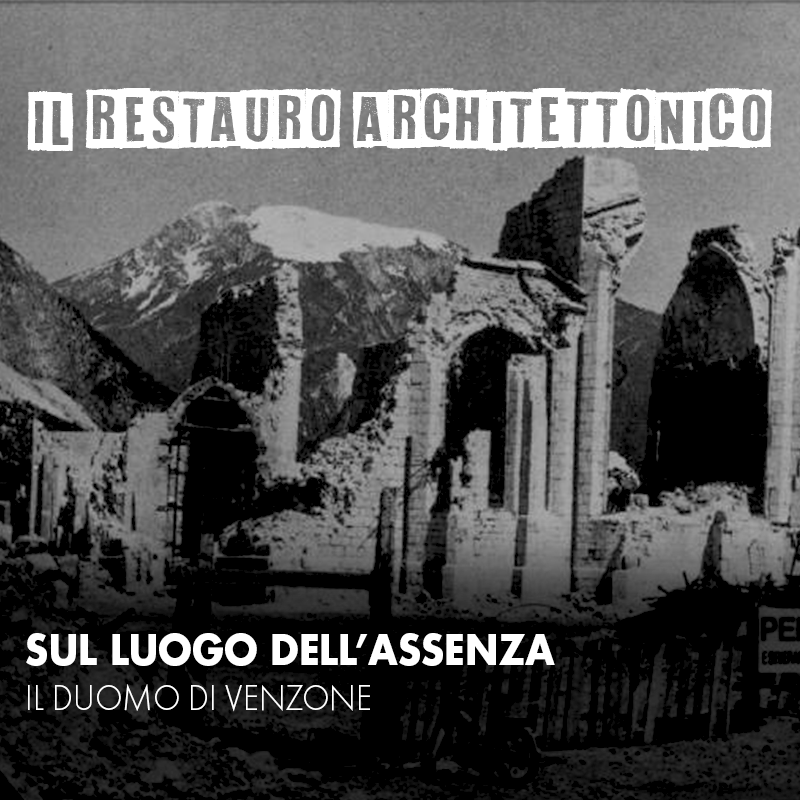
Un caso emblematico è quello di Venzone, colpita da un terremoto nel 1976. Dopo la tragedia, si è avviata una discussione sulla ricostruzione. Si è documentato accuratamente il patrimonio architettonico, mantenendo vivo il ricordo della struttura distrutta. Un comitato internazionale ha avviato una riflessione ponderata sulle modalità di recupero e conservazione, creando un “Progetto culturale” che ha funto da guida per la ricostruzione, durata otto anni.
Questo progetto ha sottolineato l’importanza di preservare le tracce storiche e identitarie presenti nei resti del Duomo di Venzone, evitando una mera riproduzione formale dell’edificio originale ma piuttosto cercando di valorizzare le diverse forme di esistenza e permanenza presenti sul sito. La documentazione storica, fotografica e fotogrammetrica ha svolto un ruolo fondamentale nella ricostruzione, offrendo una testimonianza precisa del Duomo prima del crollo e guidando i lavori di recupero nel corso degli anni. La riflessione teorica e pratica su come procedere ha fatto sì che il restauro non fosse solo una ricostruzione fisica, ma un processo di conservazione e valorizzazione della storia e dell’identità della struttura.
La ricostruzione e il restauro dei monumenti storici rimangono un tema complesso, coinvolgendo aspetti di identità culturale, simbolismo e etica. Ogni evento traumatico che colpisce un monumento pone in discussione le scelte che la società fa riguardo alla sua conservazione o alla sua ricostruzione, richiedendo un equilibrio tra preservazione dell’identità storica e rispetto per la contemporaneità e l’etica del restauro.
In some cases, symbolic reasons guided decisions: the response to terrorism in Italy led to the reconstruction of affected buildings. Similarly, the international choice to rebuild the Mostar bridge signified a rejection of the ethnic division caused by war.
The difference in treatment in the reconstruction of monuments affected by natural disasters versus those damaged by human actions raises questions about the consistency of decisions. Some buildings, such as the Pavia tower, were not rebuilt despite structural damage, while others would perhaps have required a different assessment had the cause of collapse been different.
Numerous cases of destruction and reconstruction could be listed, from post-fire reconstructions in England to more recent events such as the destruction of the Bamiyan Buddha or the Golden Dome in Iraq. Each tragedy forces a confrontation between different visions of restoration.
A case in point is that of Venzone, which was hit by an earthquake in 1976. After the tragedy, a discussion about reconstruction was initiated. The architectural heritage was carefully documented, keeping the memory of the destroyed structure alive. An international committee initiated thoughtful consideration of ways to restore and preserve it, creating a “Cultural Project” that served as a guide for the reconstruction, which lasted eight years.
This project emphasized the importance of preserving the historical and identity traces present in the remains of the Cathedral of Venzone, avoiding a mere formal reproduction of the original building, but rather seeking to enhance the different forms of existence and permanence present on the site. Historical, photographic and photogrammetric documentation has played a key role in the reconstruction, providing an accurate record of the Cathedral before the collapse and guiding the recovery work over the years. Theoretical and practical reflection on how to proceed ensured that the restoration was not just a physical reconstruction, but a process of preserving and enhancing the history and identity of the structure.
The reconstruction and restoration of historic monuments remains a complex issue, involving aspects of cultural identity, symbolism and ethics. Every traumatic event that affects a monument calls into question the choices society makes regarding its preservation or reconstruction, requiring a balance between preserving historical identity and respecting the present and the ethics of restoration.
Bibliografia
Nel restauro. Progetti per le architetture del passato – 5 novembre 2008
di Francesco Doglioni (Autore)
Scopri di più da Il Restauro Architettonico
Abbonati per ricevere gli ultimi articoli inviati alla tua e-mail.

 Il Restauro Architettonico