
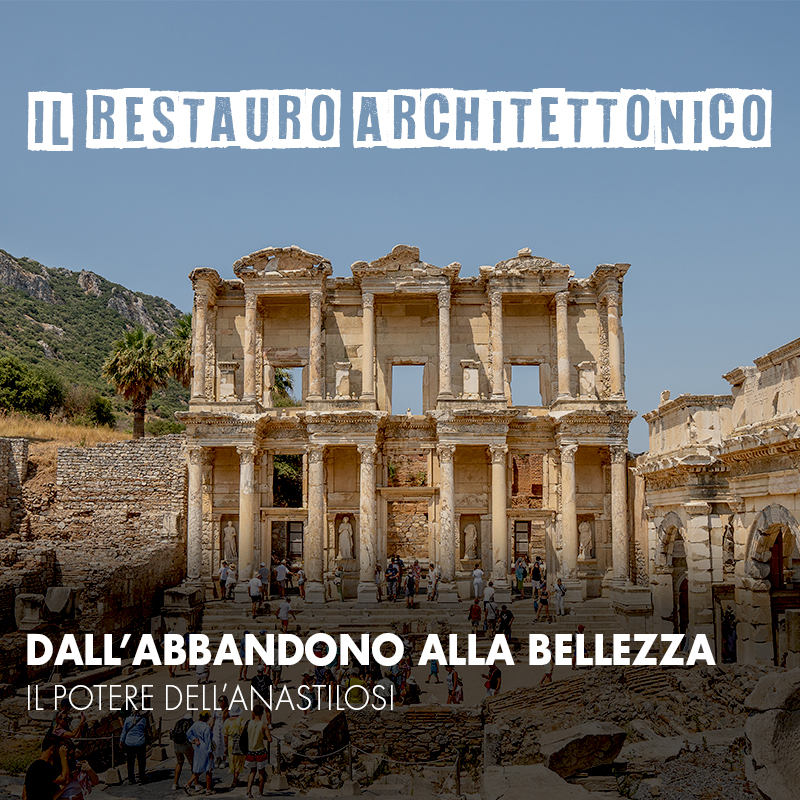
EN – From abandonment to beauty: the power of anastylosis

Dall'abbandono alla bellezza : il potere dell'anastilosi – Il Restauro Architettonico
Spesso sento parlare dell’anastilosi, un termine che deriva dal greco antico e che rappresenta una tecnica di restauro architettonico. L’anastilosi è il processo attraverso il quale un edificio o una struttura vengono restaurati, pezzo per pezzo, con l’obiettivo di riportarli alle loro condizioni originali. Questa tecnica è ampiamente utilizzata per la ricostruzione di parti complesse degli edifici, come colonne o altri elementi architettonici. Molte delle meraviglie architettoniche che ammiriamo oggi sono il risultato di questa pratica.
I often hear about anastylosis, a term derived from Ancient Greek, which represents a technique of architectural restoration. Anastylosis is the process through which a building or structure is restored, piece by piece, with the goal of bringing it back to its original condition. This technique is widely used for the reconstruction of complex parts of buildings, such as columns or other architectural elements. Many of the architectural wonders we admire today are the result of this practice.
The main reference point for anastylosis is the Athens Restoration Charter of 1931, which states that this technique should be used whenever conditions permit and is the only scientifically acceptable approach. These principles were further confirmed in the Venice Charter of 1964, which defines anastylosis as the composition of existing, previously disarticulated parts with the eventual addition of neutral elements necessary to reinstate the original appearance and ensure preservation conditions. This approach is considered the only scientifically acceptable one.
Quando si esegue un’anastilosi, è fondamentale che l’integrazione delle nuove parti sia chiaramente distinguibile al fine di preservare la leggibilità dell’intervento. Questo è un aspetto cruciale. Esistono numerosi esempi di successo di ricostruzioni attraverso l’anastilosi, come il prospetto anteriore della Biblioteca di Efeso e parti monumentali nelle vicinanze. Un altro esempio notevole è la ricostruzione del Tempio di Selinunte, i cui resti erano stati conservati in buone condizioni sotto terra a causa di un terremoto. La ricostruzione ha permesso di ammirare appieno la sua configurazione architettonica. Altri interventi di anastilosi includono il restauro del Ponte di Mostar, noto come lo Stari Most, in Bosnia ed Erzegovina, abbattuto durante le guerre degli anni ’90 ma ricostruito con successo e incluso nel patrimonio dell’UNESCO.
When performing anastylosis, it is critical that the integration of the new parts be clearly distinguishable in order to preserve the legibility of the surgery. This is a crucial aspect. There are many successful examples of reconstructions through anastylosis, such as the front elevation of the Library of Ephesus and monumental parts nearby. Another notable example is the reconstruction of the Temple of Selinunte, the remains of which had been preserved in good condition underground due to an earthquake. The reconstruction has made it possible to fully admire its architectural configuration. Other anastylosis efforts include the restoration of the Mostar Bridge, known as the Stari Most, in Bosnia and Herzegovina, which was demolished during the wars of the 1990s but successfully reconstructed and included in the UNESCO World Heritage.
Questa tecnica di restauro spesso prevede l’uso di pietre locali collegate tra loro mediante perni metallici con piombo, seguendo una tecnica prettamente medievale. Un altro esempio di successo è la ricostruzione del portico della chiesa di San Giorgio Velabro a Roma dopo l’attentato dell’agosto 1993. L’anastilosi è stata ampiamente utilizzata per la ricostruzione di antiche città, come Atene, con progetti guidati da esperti italiani come Bartoccini e Giacomo Gendi. Questo perché l’anastilosi permette di rispettare il materiale esistente e di reinserirlo nella sua posizione originale, ricostruendo le parti precedentemente smembrate senza comprometterne l’autenticità. È importante notare che il successo di queste operazioni dipende dall’abilità nell’integrazione delle nuove parti. Nel prossimo episodio, esploreremo un esempio emblematico di intervento di anastilosi, ovvero la ricostruzione del Duomo di Venzone, che fu gravemente danneggiato da un terremoto nel maggio 1979.
This restoration technique often involves the use of local stones connected by metal pins with lead, following a distinctly medieval technique. Another successful example is the reconstruction of the portico of the church of San Giorgio Velabro in Rome after the August 1993 bombing. Anastylosis has been widely used in the reconstruction of ancient cities, such as Athens, with projects led by Italian experts such as Bartoccini and Giacomo Gendi. This is because anastylosis allows existing material to be respected and reinserted in its original position, reconstructing previously dismembered parts without compromising their authenticity. It is important to note that the success of these operations depends on skill in integrating the new parts. In the next episode, we will explore an emblematic example of anastylosis intervention, namely the reconstruction of Venzone Cathedral, which was severely damaged by an earthquake in May 1979.
Scopri di più da Il Restauro Architettonico
Abbonati per ricevere gli ultimi articoli inviati alla tua e-mail.

 Il Restauro Architettonico