
Camillo Boito: Un Maestro del Restauro Architettonico – Il Restauro Architettonico
Il campo della letteratura filologica è un insieme di studi volti a riportare un testo alla sua forma originale, eliminando errori e modifiche. Inoltre, si cerca di interpretare il testo, identificando l’autore, il periodo storico e l’ambiente culturale in cui è stato scritto. Secondo Giovanni Carbonara, il restauro filologico è la prima moderna dottrina di restauro, sviluppata in Italia, e le sue radici derivano non solo dalla filologia, ma anche dall’archeologia e dalla critica testuale.
The field of philological literature is a collection of studies aimed at returning a text to its original form, eliminating errors and modifications. Additionally, the text is interpreted to identify the author, historical period, and cultural environment in which it was written. According to Giovanni Carbonara, philological restoration is the first modern doctrine of restoration, developed in Italy, and its roots stem not only from philology but also from archaeology and textual criticism.
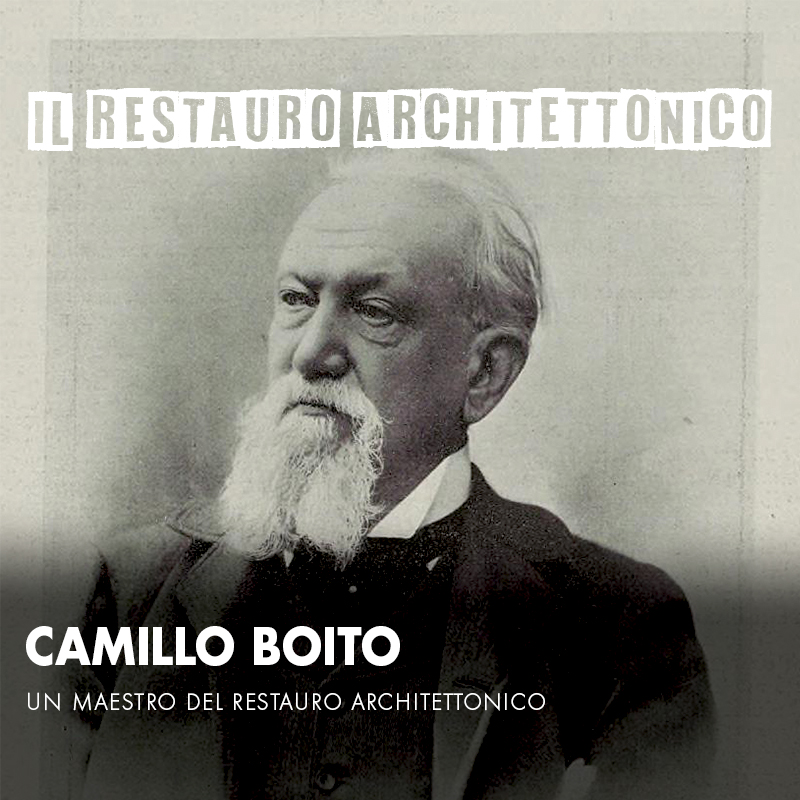
Il principale esponente del restauro filologico è Camillo Boito, un architetto teorico dell’architettura. Boito ha teorizzato una nuova cultura basata su una diversa visione del Medioevo, che nasce da un desiderio patriottico e da presupposti moderni. Questa cultura promuove una nuova relazione tra passato e presente, distinguendo la conservazione dell’architettura antica dalla progettazione delle nuove.
The main exponent of philological restoration is Camillo Boito, a theoretical architect. Boito theorized a new culture based on a different view of the Middle Ages, born out of patriotic aspirations and modern presuppositions. This culture promotes a new relationship between the past and the present, distinguishing the preservation of ancient architecture from the design of the new.
Un esempio dell’architettura di Boito è l’ospedale di Gallarate del 1871, che è stato considerato un nuovo stile italiano. Boito ha enfatizzato l’importanza di evitare restauri stilistici e ha ironizzato sul fatalismo di alcuni teorici del restauro. Boito ha anche tratto spunti dalla teoria di Ruskin. Tuttavia, ha sottolineato l’importanza della manutenzione per preservare gli edifici nel tempo. La posizione di Boito ha superato il restauro conservativo e stilistico, adottando una nuova prospettiva culturale. Questa posizione è stata definita da Ceschi come una naturale disposizione verso l’equilibrio e l’armonia, che ha costituito la base della moderna scuola italiana di restauro.
An example of Boito’s architecture is the Gallarate hospital of 1871, which was considered a new Italian style. Boito emphasized the importance of avoiding stylistic restorations and made ironic remarks about the fatalism of some restoration theorists. Boito also drew inspiration from Ruskin’s theory. However, he stressed the importance of maintenance to preserve buildings over time. Boito’s position went beyond conservative and stylistic restoration, adopting a new cultural perspective. This position has been defined by Ceschi as a natural disposition towards balance and harmony, which has formed the basis of the modern Italian school of restoration.
Boito ha delineato due criteri fondamentali: conservare l’aspetto artistico e pittoresco originale dei monumenti e, se necessario, apportare modifiche che siano chiaramente identificabili come opere moderne. Ha anche distinto tre qualità nei monumenti: importanza archeologica, apparenza pittoresca e bellezza architettonica, applicando diverse approcci di restauro a ciascuna. Boito ha lavorato su numerosi progetti di restauro, tra cui la chiesa dei Santi Maria e Donato a Murano. Ha cercato di conservare l’aspetto originale dell’altare di Donatello, evitando restauri eccessivi.
Boito outlined two fundamental criteria: preserving the artistic and picturesque originality of the monuments and, if necessary, making modifications that are clearly identifiable as modern works. He also distinguished three qualities in the monuments: archaeological importance, picturesque appearance, and architectural beauty, applying different restoration approaches to each. Boito worked on numerous restoration projects, including the church of Saints Maria and Donato in Murano. He sought to preserve the original appearance of Donatello’s altar, avoiding excessive restoration.
Infine, Boito ha promosso l’importanza della documentazione fotografica e scritta durante i restauri e ha sottolineato che i monumenti antichi dovrebbero essere considerati come documenti storici essenziali. In sintesi, il pensiero di Camillo Boito enfatizza la conservazione degli aspetti originali dei monumenti, con interventi di restauro mirati e una rigorosa documentazione, evitando restauri eccessivamente invasivi. La sua visione ha avuto un impatto significativo sul campo del restauro architettonico in Italia.
Finally, Boito has promoted the importance of photographic and written documentation during restorations and has emphasized that ancient monuments should be considered essential historical documents. In summary, Camillo Boito’s thinking emphasizes the preservation of the original aspects of monuments, with targeted restoration interventions and rigorous documentation, avoiding excessively invasive restorations. His vision has had a significant impact on the field of architectural restoration in Italy.
Biografia
Camillo Boito, figlio dell’artista Silvestro Boito e fratello maggiore del celebre letterato e musicista Arrigo Boito, fu un architetto di grande rilievo. Dopo aver studiato a Padova e all’Accademia di Venezia sotto la guida di Pietro Selvatico, divenne professore aggiunto di architettura nel 1856. Successivamente, insegnò architettura all’Accademia di Belle Arti di Brera dal 1860 al marzo 1908 e, per ben 43 anni a partire dal 1865, fu docente all’Istituto Tecnico Superiore di Milano. Fu uno dei fondatori della Scuola Professionale d’Arte Muraria di Milano nel 1888. Nel 1862, Camillo Boito sposò la cugina Celestina, ma ben presto si separarono. Nel 1887, si risposò con la contessa Madonnina Malaspina dei marchesi di Portogruaro, che lo soprannominò “Casamatta.”
Camillo Boito, son of the artist Silvestro Boito and older brother of the famous writer and musician Arrigo Boito, was a prominent architect. After studying in Padua and at the Academy of Venice under the guidance of Pietro Selvatico, he became an adjunct professor of architecture in 1856. Later, he taught architecture at the Brera Academy of Fine Arts from 1860 to March 1908, and for 43 years starting in 1865, he was a professor at the Higher Technical Institute of Milan. He was one of the founders of the Professional School of Masonry Art in Milan in 1888. In 1862, Camillo Boito married his cousin Celestina, but they soon separated. In 1887, he remarried the Countess Madonnina Malaspina of the Marquis of Portogruaro, who nicknamed him “Casamatta”.
Despite his various activities, architecture remained his main occupation. Among his most well-known projects are the intervention in the Palazzo della Ragione in Padua, the creation of the Palazzo delle Debite, the transformation of an Antonian convent into the Civic Museum, the expansion of the cemetery, and the works on the basilica of Sant’Antonio in Padua, including a controversial restoration of Donatello’s altar. Additionally, Boito was involved in the restoration of the Pusterla di Porta Ticinese and designed the “Giuseppe Verdi” Retirement Home for Musicians in Milan, the facade of the church of Santa Maria Assunta, and the hospital in Gallarate, Varese. Camillo Boito also participated in the literary movement of Scapigliatura, debuting with “Storielle vane” in 1876 and following it with “Senso. Nuove storielle vane” in 1883. This latter story inspired Luchino Visconti’s famous film, but the original plot was very different and far from patriotic. Boito also wrote “Il Maestro di setticlavio” in 1891, published in the Nuova Antologia magazine, along with other stories featuring fantastic and macabre elements reminiscent of authors like E.T.A. Hoffmann, Edgar Allan Poe, and Iginio Ugo Tarchetti. However, unlike these authors, Boito maintained a clear and rigorous style, far from the excesses of the Scapigliatura prose of the time. The central theme of Camillo Boito’s works was always beauty in all its forms, especially feminine beauty, but also musical and artistic beauty. His refined and sober style made him beloved by readers, especially those who were approaching literature for the first time. His last work, “Il maestro di setticlavio,” a collection of stories, was published in 1891. From 1898, Boito also served as the second director of the Poldi Pezzoli Museum.
Despite his various activities, architecture remained his main occupation. Among his most well-known projects are the intervention in the Palazzo della Ragione in Padua, the creation of the Palazzo delle Debite, the transformation of an Antonian convent into the Civic Museum, the expansion of the cemetery, and the works on the basilica of Sant’Antonio in Padua, including a controversial restoration of Donatello’s altar. Additionally, Boito was involved in the restoration of the Pusterla di Porta Ticinese and designed the “Giuseppe Verdi” Retirement Home for Musicians in Milan, the facade of the church of Santa Maria Assunta, and the hospital in Gallarate, Varese. Camillo Boito also participated in the literary movement of Scapigliatura, debuting with “Storielle vane” in 1876 and following it with “Senso. Nuove storielle vane” in 1883. This latter story inspired Luchino Visconti’s famous film, but the original plot was very different and far from patriotic. Boito also wrote “Il Maestro di setticlavio” in 1891, published in the Nuova Antologia magazine, along with other stories featuring fantastic and macabre elements reminiscent of authors like E.T.A. Hoffmann, Edgar Allan Poe, and Iginio Ugo Tarchetti. However, unlike these authors, Boito maintained a clear and rigorous style, far from the excesses of the Scapigliatura prose of the time. The central theme of Camillo Boito’s works was always beauty in all its forms, especially feminine beauty, but also musical and artistic beauty. His refined and sober style made him beloved by readers, especially those who were approaching literature for the first time. His last work, “Il maestro di setticlavio,” a collection of stories, was published in 1891. From 1898, Boito also served as the second director of the Poldi Pezzoli Museum.


Scopri di più da Il Restauro Architettonico
Abbonati per ricevere gli ultimi articoli inviati alla tua e-mail.

 Il Restauro Architettonico